Slow Drains and Gurgling Toilets Across the House? Septic Warning Signs
July 20, 2026
Quick Answer: When drains slow down and toilets gurgle all over the house at the same time, the problem is almost never a single clogged fixture. It points back to the septic system, usually a tank that is overdue for pumping, a clogged outlet or main line, or a drain field that can no longer take the water. Air gets trapped as wastewater struggles to move, and it escapes as gurgling. Treat it as an early warning: cut back water use and have the tank checked before it turns into a backup.
You run the washing machine, and a few minutes later the toilet in the back bathroom starts bubbling. The kitchen sink takes longer to clear than it used to. A shower drains slow enough that water pools around your feet. When these things happen in one room, you blame that fixture. When they happen everywhere at once, something bigger is going on, and on a home with a septic system that something is usually underground.
Slow drains and gurgling toilets across the whole house are one of the clearest early signals a septic system sends. The good news is that this is a warning, not a disaster yet. Catch it here and you are dealing with a maintenance call. Ignore it and you are dealing with sewage in the lowest drain in the house. Here is what those sounds and slow drains actually mean, why they tend to show up together, and what the ground under a Piedmont yard has to do with it.
When the Whole House Slows Down at Once
A single slow drain is a local problem. Hair in the shower trap, grease in the kitchen line, a toy in the toilet. You clear that one fixture and the rest of the house is fine. That is not what is happening here.
When every drain in the house gets sluggish around the same time, the restriction is not in any one fixture. It is downstream of all of them, at the point where every drain line in the house ties together and heads out to the septic tank. Everything you flush, rinse, and drain funnels into that one path, and if that path is blocked or backed up, the whole house feels it at once. That is the difference that matters most: one slow drain is a plumbing chore, but the whole house slowing together is the septic system telling you it cannot move water the way it should.
The pattern is the clue.
Pay attention to when the trouble shows up. If the toilet gurgles specifically when the washing machine drains or someone takes a long shower, that timing tells you the system is struggling to handle a surge of water. A tub, a toilet, and a laundry drain all acting strange together points to a shared cause well past any single fixture, and that shared cause is the tank and the field.
Why a Gurgling Toilet Is the System Talking to You
That bubbling sound is not random, and it is not the toilet being dramatic. It is physics. Your drain system is designed so wastewater flows out while air moves freely through the plumbing vents, keeping the pressure balanced. When wastewater cannot flow out the way it should, pressure builds inside the drain line, and that trapped air has to escape somewhere. The easiest escape route is up through the water in the nearest toilet bowl. That is the gurgle.
So a gurgling toilet is really the sound of air being forced backward because the water in front of it is not moving. The toilet is rarely the actual problem. It is just the spot where the symptom surfaces. The real restriction is usually farther down the line: a tank that is too full, a clogged inlet or outlet, a plugged main line running to the tank, or a drain field that has stopped accepting effluent. Plunging the toilet does nothing for any of those, which is exactly why the gurgle keeps coming back after you think you have fixed it.
The reason these sounds deserve respect is what they come before. A gurgling toilet paired with slow drains is often the last quiet warning a system gives before wastewater starts backing up into the house. The system is clearing its throat. It is worth listening while the fix is still simple.
What Is Actually Happening Underground
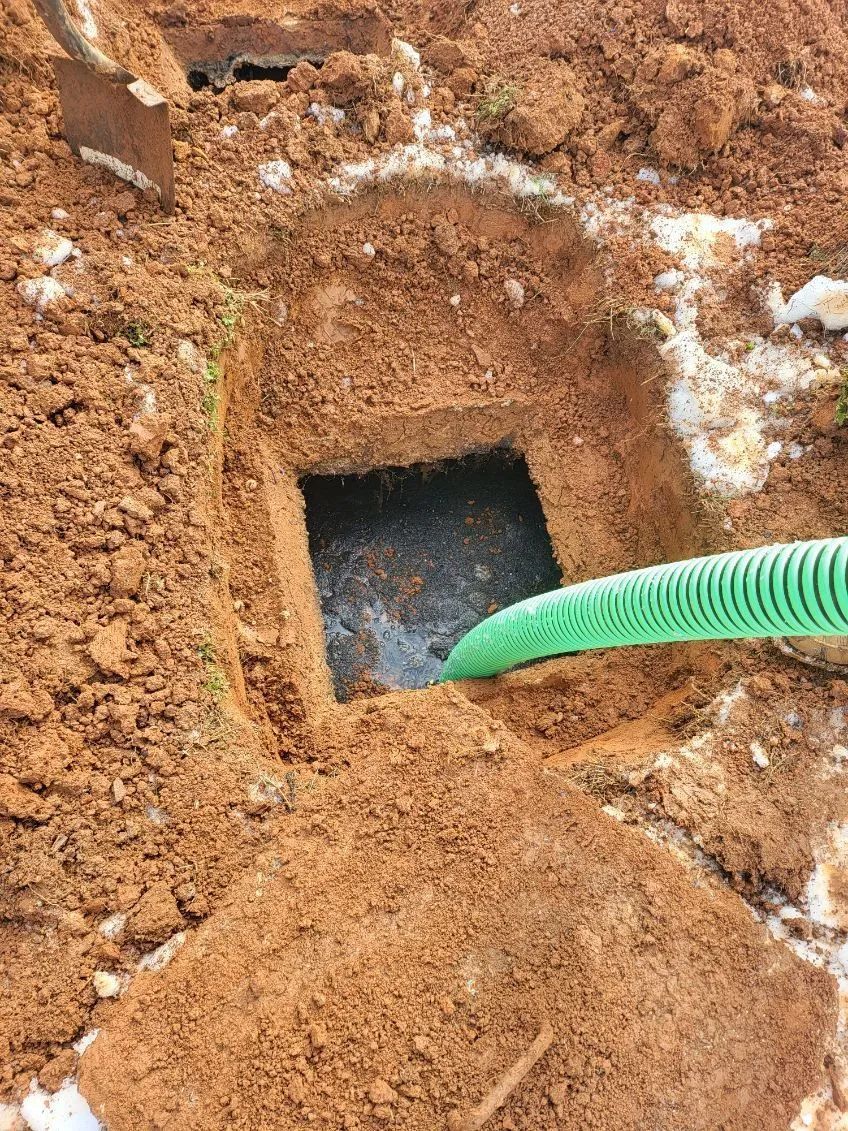
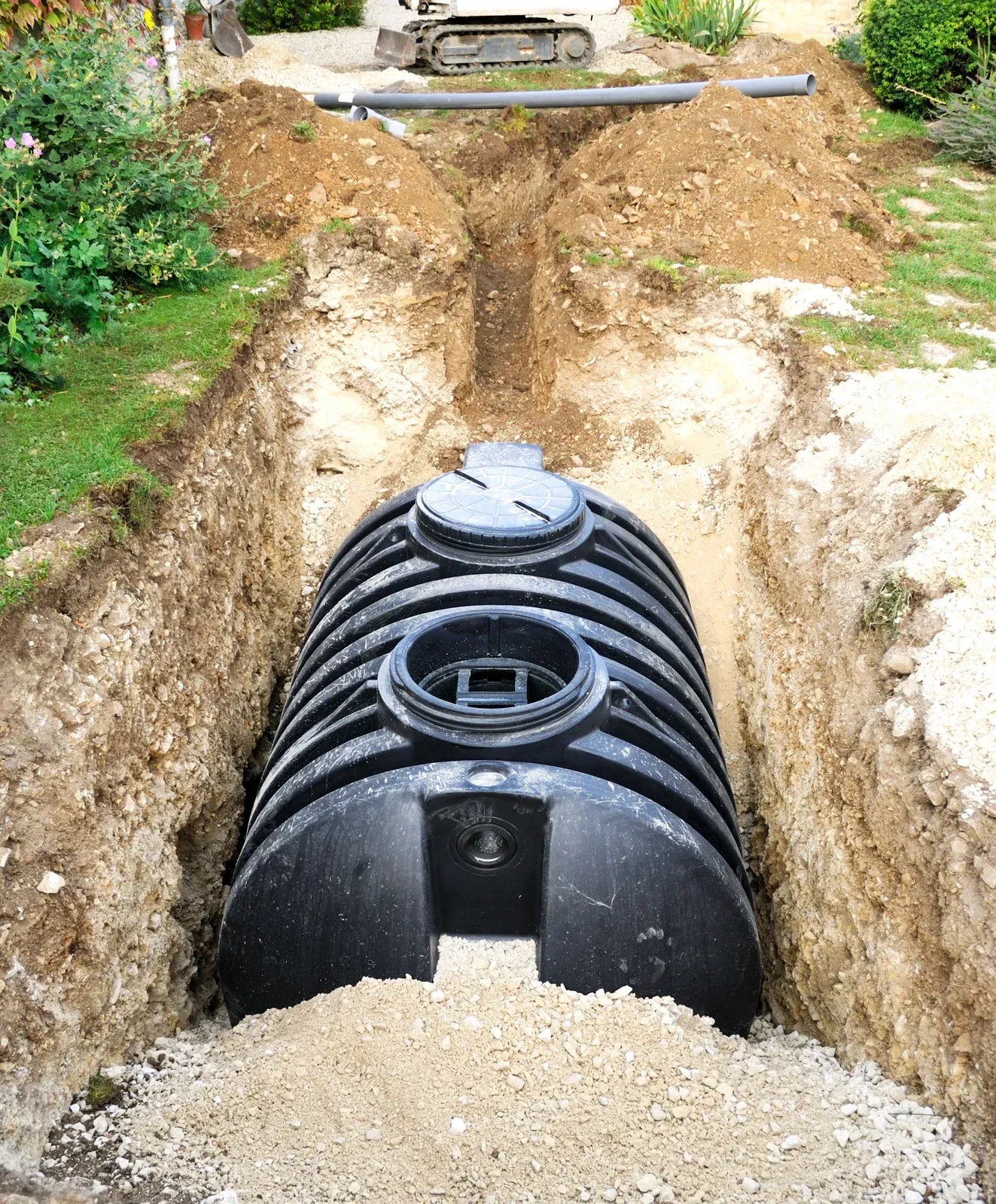
To understand why the whole house slows down, it helps to picture where the water goes. A conventional septic system has three parts that matter here: the tank, the drain field, and the soil beneath it. Wastewater leaves the house and flows into a watertight tank, often around a thousand gallons on a typical home. Inside, solids sink to form a sludge layer on the bottom and grease floats up as a scum layer on top. The liquid in the middle, the effluent, needs roughly two days of quiet retention to separate properly before it flows out to the drain field.
From the tank, that effluent runs into perforated pipe in gravel trenches and trickles down into the soil, which is where the real treatment happens. Over time a thin biological layer called a biomat forms in the top one to six inches of soil right below the trench. In a healthy system that biomat is useful, filtering out germs as effluent passes through. The trouble starts when the tank is never pumped. Solids build up, overflow the outlet, and wash into the trenches, where they thicken that biomat until it seals the soil off completely. Once the soil below the trenches clogs, effluent has nowhere to go. It backs up the pipe, fills the tank, and slows every drain in the house.
That is the chain reaction behind the symptoms. Slow drains and gurgling are the upstairs version of a downstairs problem: water is not leaving the tank and field, so it stops leaving the house.
The Common Causes, From Full Tank to Failing Field
Several different faults produce the same whole-house symptoms. Sorting out which one you have is what a proper inspection is for, but these are the usual suspects.
A tank overdue for pumping
This is the most common cause by a wide margin. Most household tanks need pumping every three to five years, and many homeowners simply lose track. As the sludge and scum layers grow, there is less room for water to settle and pass through, so drains slow and the system starts gurgling. If you cannot remember the last time the tank was pumped, this is where to start.
A clogged outlet or effluent filter
Newer systems have a filter at the tank outlet that catches solids before they reach the field. That filter can clog, and when it does, effluent cannot leave the tank, mimicking a full tank exactly. Older tanks rely on a baffle or sanitary tee that can break off and block flow the same way.
A blocked main line to the tank
The pipe carrying wastewater from the house to the tank can clog with grease, roots, or flushed items that do not break down. When that single shared line restricts, every fixture in the house feels it, because they all drain through it.
A saturated or failing drain field
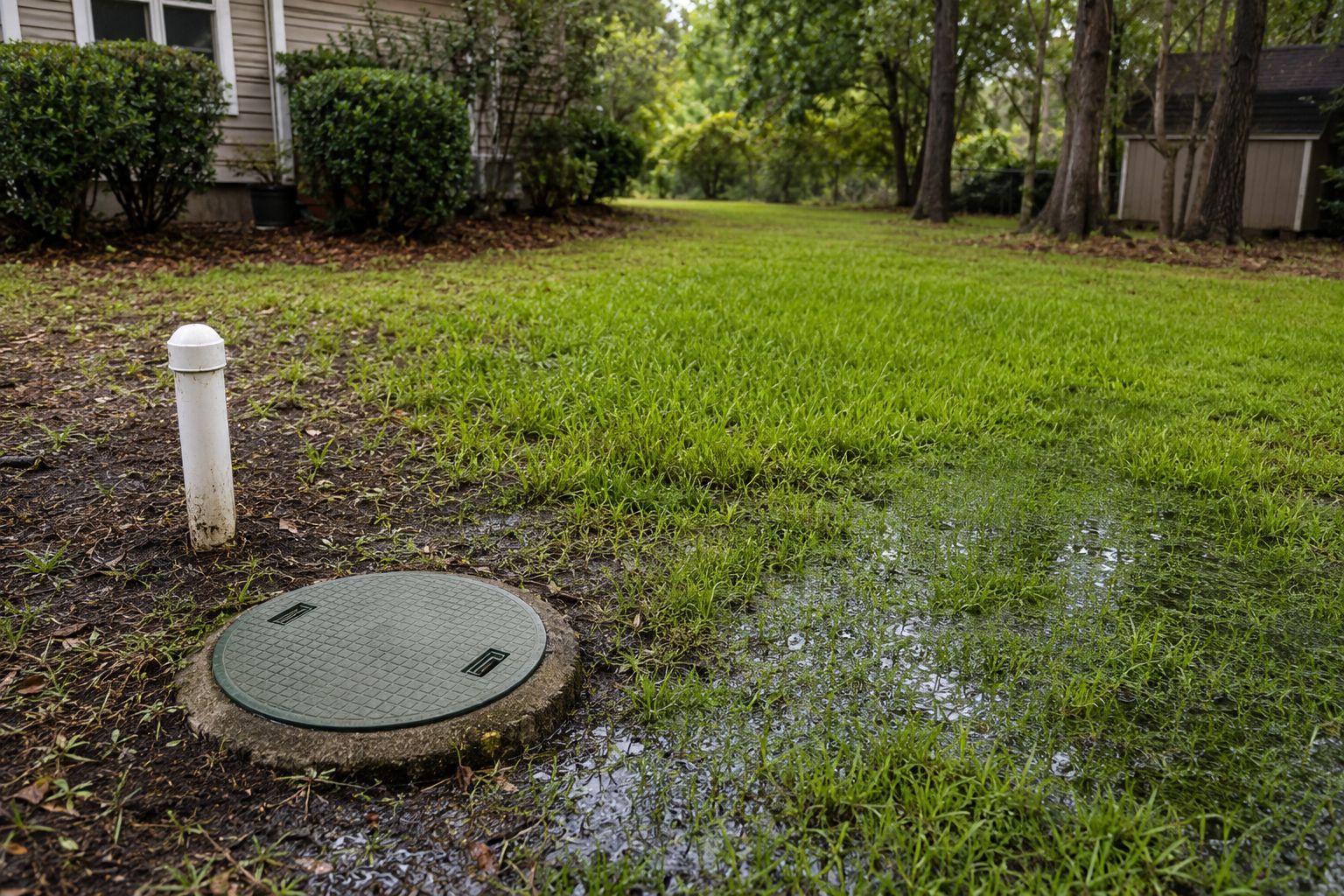
If the field can no longer absorb effluent, water backs all the way up the system. On heavy clay ground this is common, and it often gets worse after a stretch of rain when the soil is already full of water and simply cannot take more.
Too much water, too fast
Running several loads of laundry back to back or draining a large tub sends a surge into a system that treats water slowly. A borderline system that copes with steady use will gurgle and back up when it gets hit with a flood of water all at once.
What to Do the Moment You Notice It
The first move is to stop feeding the system. Hold off on laundry, long showers, and the dishwasher until you know the cause. Easing off gives the system room while you get it looked at.
Skip the chemical drain cleaners. They do not reach a blockage in the tank or field, they damage the bacteria the system relies on, and they make the water hazardous for anyone opening the line.
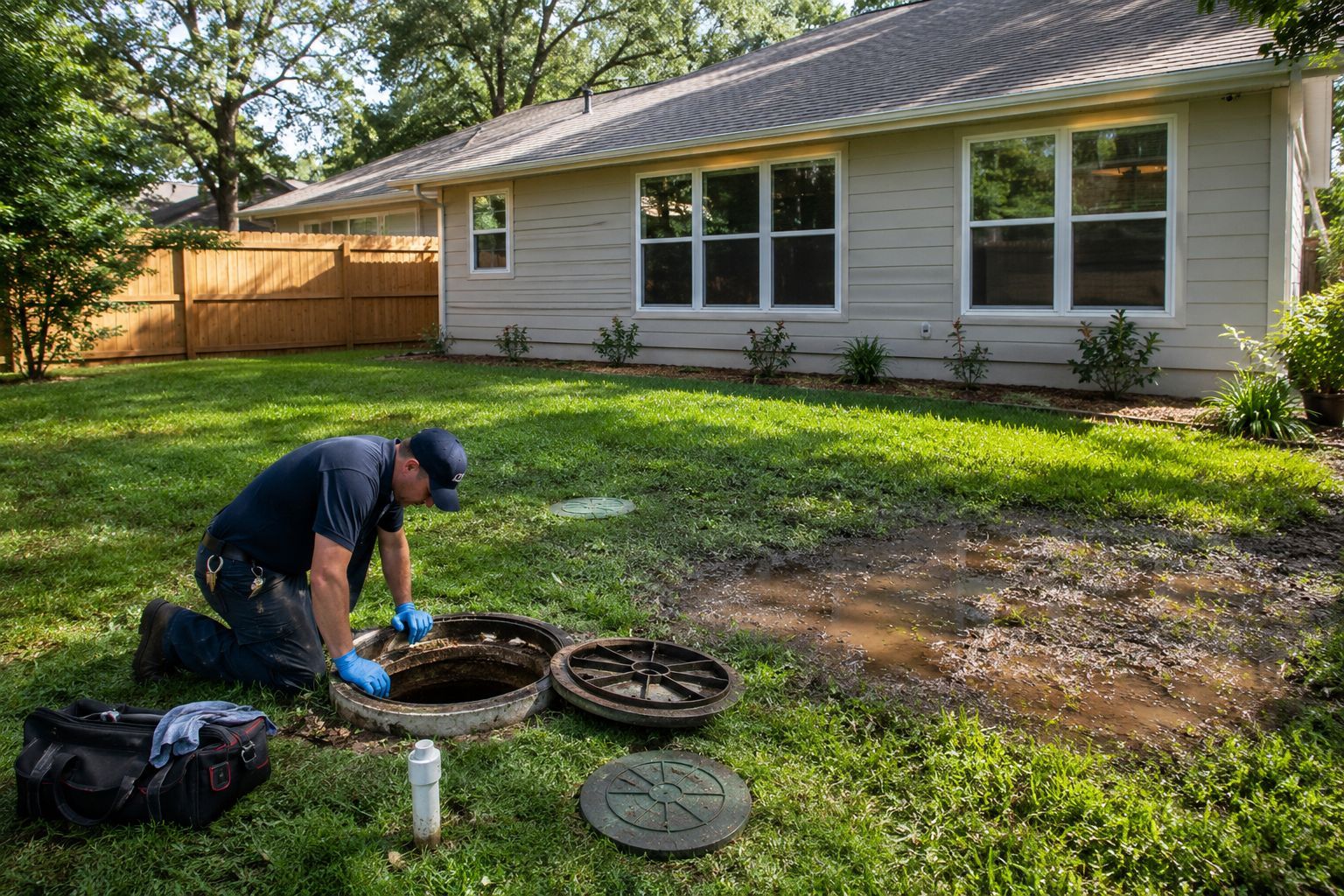
The reliable next step is having the tank opened and checked. A professional reads the sludge and scum levels, inspects the outlet and filter, and tells you whether this is a pump-out or something else.
Warning:
Do not keep using the system hard while hoping the gurgling clears on its own. If the tank or field is backed up, continued heavy water use can push raw sewage up through the lowest drain in the house, a floor drain, a basement shower, or a first-floor toilet. Once that happens you are dealing with a contaminated backup instead of a slow drain. When the whole house is gurgling, ease off the water and get it checked.
Frequently Asked Questions
Does a gurgling toilet always mean a septic problem?
Not always, but on a septic system it should never be brushed off, especially with multiple fixtures affected. A single gurgle can be a minor vent issue, but gurgling across several drains points to the tank or field.
Can I just pump the tank and be done with it?
Often yes, if a full tank is the cause and the field is still healthy. Pumping restores room for water to move. But if the field has clogged, pumping buys only days before it fills again.
How often should the tank be pumped so this does not happen?
Most households land in the three-to-five-year range, depending on tank size, occupants, and water use. Bigger families and heavier use shorten the interval, and a garbage disposal shortens it further. Checking the levels settles any doubt.
Why do my drains slow down more after heavy rain?
Because your drain field depends on surrounding soil to absorb effluent, and saturated ground cannot take more. On the heavy clay here, a wet stretch can tip a borderline field into backing up. That signals a field near its limit.
Is it safe to keep using water while the drains are slow?
It is better not to. Every gallon adds to a system already struggling to move water, pushing it toward a full backup indoors. Cut back on laundry, dishes, and long showers until the tank has been checked.
Will store-bought septic additives fix slow drains?
No. Additives marketed to break down solids have not been shown to reduce buildup or restore a field, and some contain chemicals that harm the field or groundwater. Slow drains call for a real inspection, not a bottle.
Reading the Warning Before It Becomes a Backup
When drains slow and toilets gurgle all over the house at the same time, the system is not being fussy. It is telling you that water is not leaving the tank and field the way it should, and that the pressure has nowhere to go but back up through your fixtures. Almost always the cause is a tank overdue for pumping, a clogged line or filter, or a field that has reached its limit, and the heavy clay under Piedmont yards tends to push those limits closer. The sounds are the easy part to notice. The point is to act on them while a service call still solves it, instead of waiting for the day sewage comes up through the lowest drain in the house.
Have your
septic system
checked at the first sign of whole-house slow drains — You want a system that quietly moves water away from your home, not one that gurgles a warning every time the washer runs. Our crew opens and reads the tank, checks the outlet and filter, clears the line, and evaluates whether your drain field is keeping up with this region's heavy clay, then tells you plainly whether a pump-out or a field repair is what you need. Serving Winston-Salem, North Carolina, with several
years of septic and excavation experience, licensed and insured work, and a satisfaction guarantee behind every job, Newcomb Septic Services
turns a gurgling, sluggish system back into one you never have to think about. Reach out to schedule an inspection before a slow drain becomes a backup.