Sewage Smell or a Wet, Spongy Patch Over the Drain Field? What It Means
August 29, 2026
Quick Answer: A sewage odor paired with a wet, spongy patch over the drain field almost always means wastewater is surfacing instead of soaking into the soil below. In Piedmont North Carolina's red clay, the most common culprits are a clogged distribution box sending too much effluent to one line, a biomat layer that has sealed off the trench walls, or soil that never had much capacity to absorb water in the first place. The fix depends on which one it is, but the patch will not dry out or air out on its own, and using that section of yard while it is happening adds more wastewater to ground that is already full.
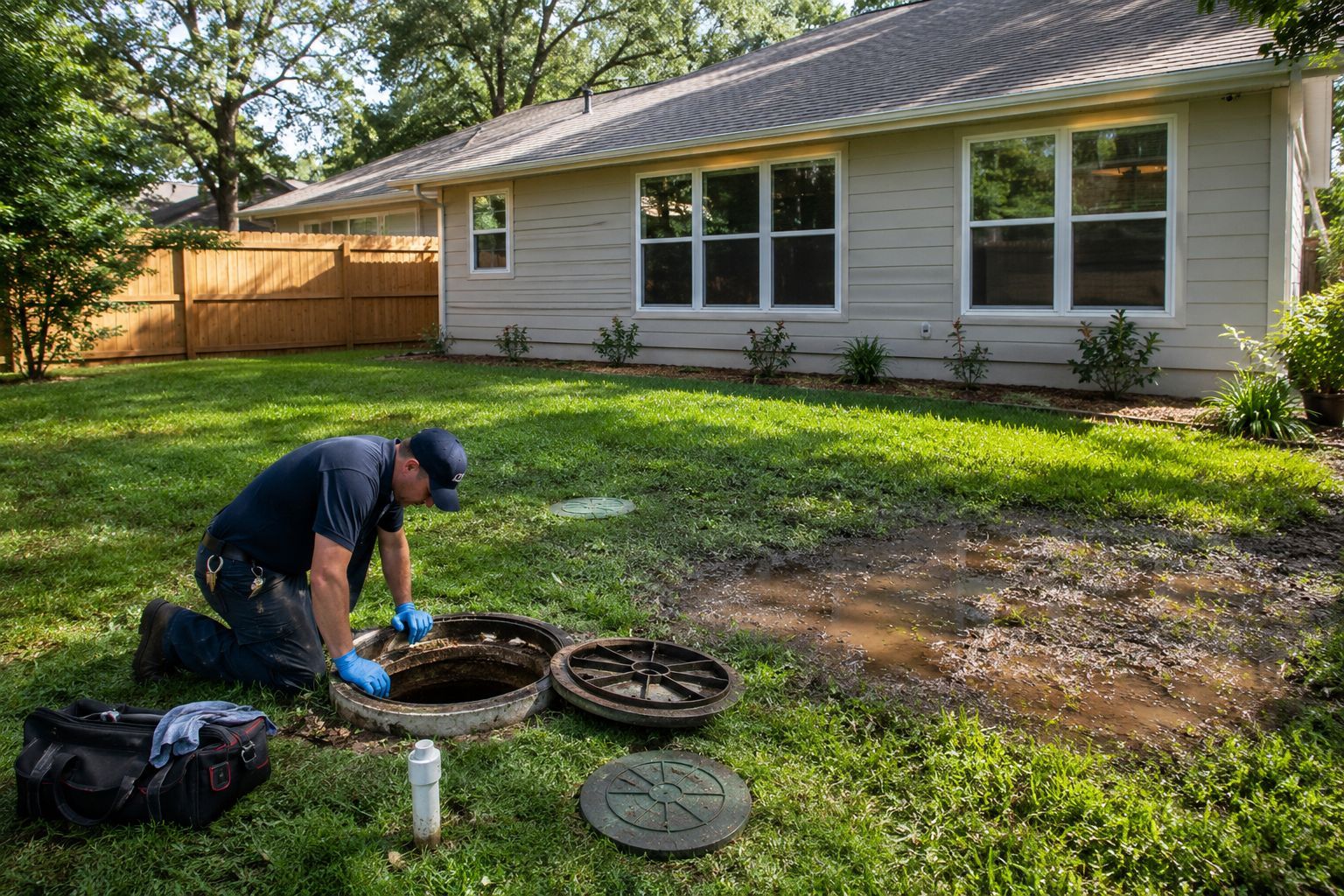
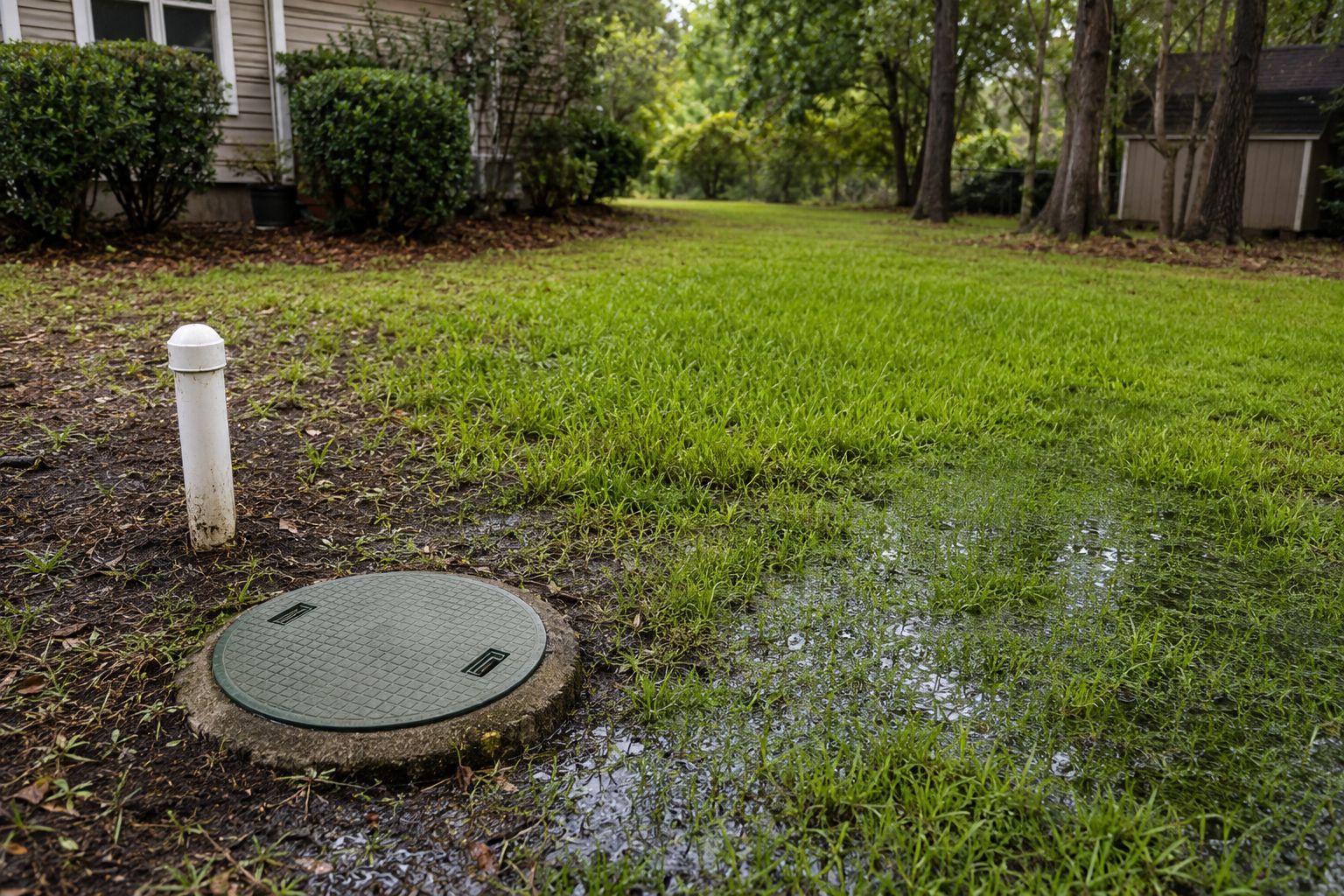
You walk out to check the mail, or maybe you are mowing a strip near the side yard, and your boot sinks half an inch into ground that has not seen rain in a week. A few steps later, the smell hits. Not garbage. Not standing water. Something closer to a backed-up drain. If that patch sits roughly where your drain field runs, your septic system is telling you something specific: wastewater that is supposed to disappear into the soil is pooling at or near the surface instead.
This combination, odor plus a soft, saturated patch of ground, is one of the clearest early warnings a septic system gives before a full backup reaches the house. Catch it here, while it is still a wet spot in the yard and not sewage in the tub, and you are looking at a repair. Miss it, and you are looking at a field replacement.
What's Actually Happening Under That Patch
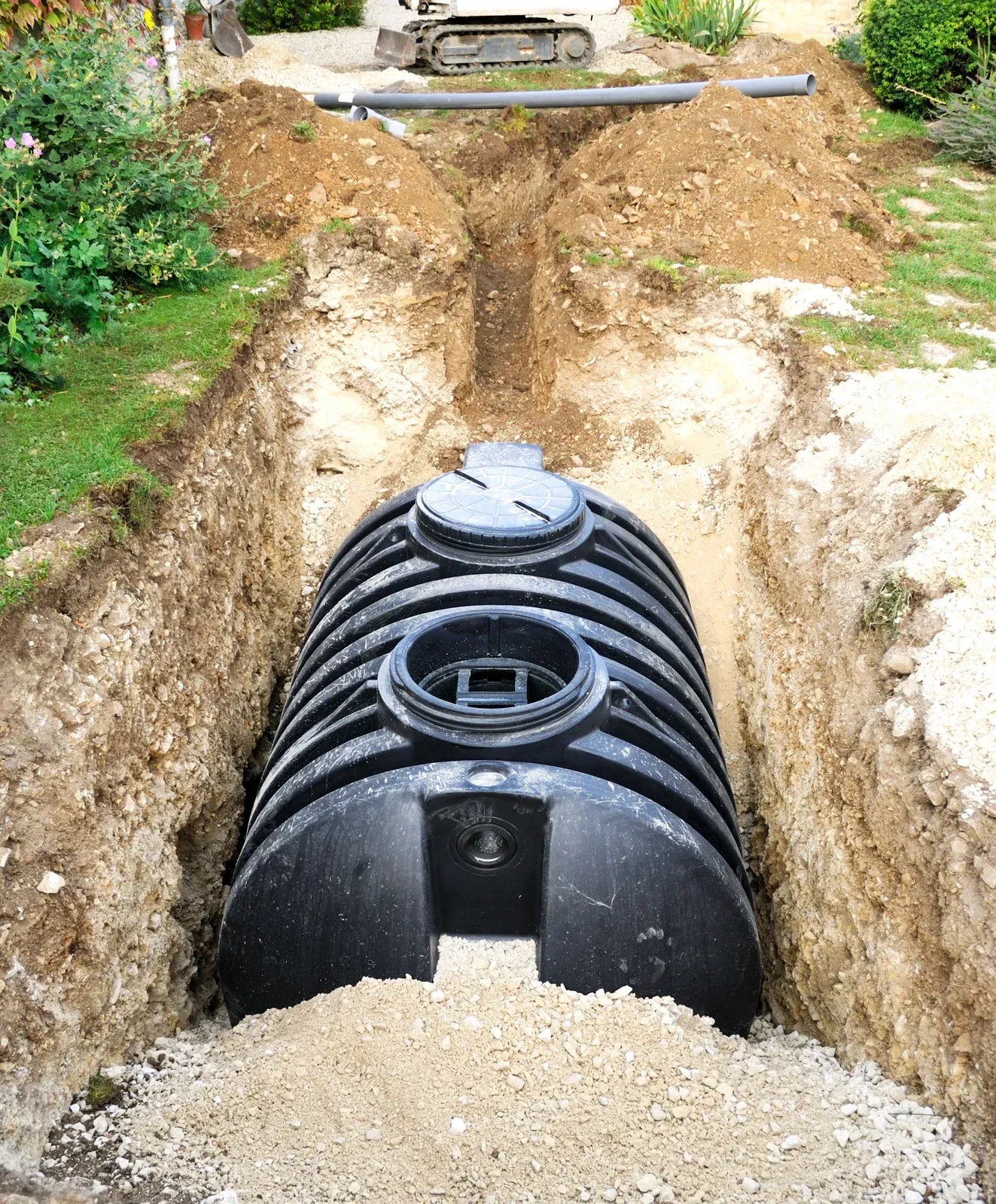
A healthy drain field works because effluent leaving the septic tank spreads evenly through a network of perforated pipes, drips slowly into gravel-filled trenches, and percolates down through the soil beneath. The soil is doing the real work here, filtering out pathogens and breaking down what is left as the water moves toward the water table. When that process runs the way it should, you would never know the field was there.
A wet, odorous patch means one of two things. Either the soil below cannot accept effluent fast enough, so it is backing up and reaching the surface, or it is finding the shortest path up through the topsoil instead of continuing down. Either way, wastewater that is supposed to be treated underground is sitting on top of the ground now, and the smell is exactly what you would expect: raw or partially treated sewage exposed to open air.
Why it shows up as a spot, not the whole field
Drain fields are almost never uniform once a problem develops. One trench line often takes the brunt of the flow while others sit comparatively dry, so the surfacing concentrates over whichever line is most overloaded or closest to a blockage. That is the reason for a defined patch instead of the whole field turning soggy at once.
The Usual Suspects in Piedmont Clay
Every drain field problem traces back to a handful of root causes. Which one is most likely depends heavily on what is underneath your yard. Around Winston-Salem and across the Piedmont Triad, that is almost always red clay, and clay changes the math on drain field failure in a few specific ways.
A Clogged or Unlevel Distribution Box
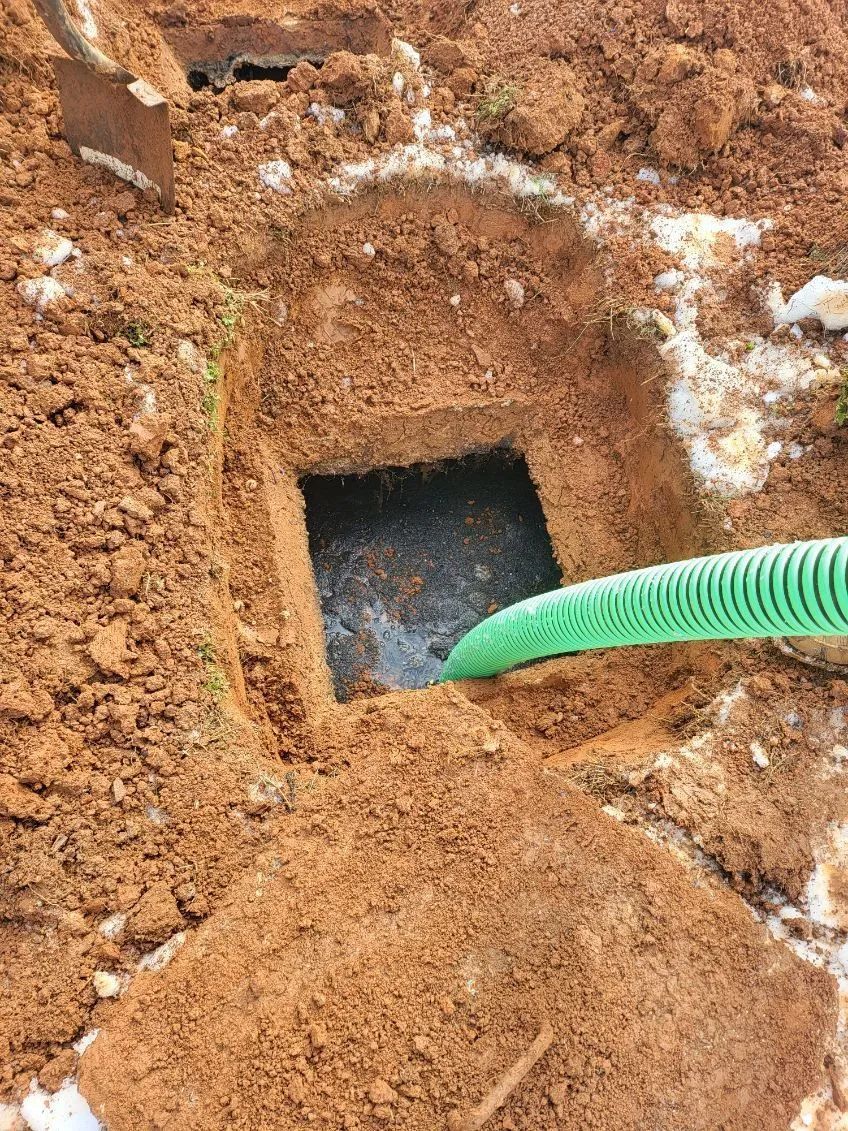
The distribution box divides effluent among trench lines. If sludge, shifting, or a clogged outlet disrupts that balance, one line can receive too much wastewater. That trench becomes saturated quickly, causing a wet, smelly patch while other sections remain relatively dry.
Biomat Buildup Sealing the Trench Walls
Biomat naturally develops as bacteria treat wastewater, but excessive buildup can seal trench walls and restrict absorption. Heavy water use, grease, or delayed pumping can accelerate growth. Once the soil cannot accept effluent efficiently, wastewater backs up and begins surfacing.
Clay's Percolation Limit
Clay soil has small pore spaces that naturally slow water movement. Even a properly designed drain field has less absorption capacity than one in sandy soil. Biomat buildup, borderline sizing, or seasonal saturation can push a clay-based system beyond its effective limits.
Soil Compaction from Traffic or Grading
Clay becomes highly compacted when vehicles, equipment, or repeated traffic cross the drain field. Grading can also redirect surface water toward the trenches. Compacted soil drains poorly, reducing its ability to absorb effluent and increasing the likelihood of persistent wet patches.
Excess Water Reaching the Field
Even a properly sized drain field can become overwhelmed by excessive water. Leaking toilets, frequent laundry, long showers, or runoff from roofs and driveways can add more water than the system can absorb, causing clay soil to become saturated and wastewater to surface.
Tip: Note where the wet patch sits relative to your septic tank lid and the field lines, if you know the layout. That location, closer to the tank versus toward the far end of the field, is one of the first things a technician will ask about, and it helps narrow down whether the issue sits at the distribution box or further out in the trenches.
Reading the Rest of the Signs
The smell-and-soggy-patch combination rarely shows up completely alone. A few other signs tend to travel with it, and noticing them helps confirm what is going on before a technician even arrives.
Grass That's Greener Or Grows Faster Right Over The Field
Effluent carries nutrients that can cause grass above a leaking trench to grow faster and appear greener than the surrounding lawn, even during dry periods when the rest of the grass begins looking stressed or dormant.
Drains That Are Slower Than Usual Throughout The House
When the drain field struggles to accept wastewater, backpressure can develop throughout the septic system. Sinks, tubs, and toilets may drain more slowly than usual, often affecting multiple fixtures rather than just one bathroom.
The Patch Getting Worse After Water Use, Not Just After Rain
A field overloaded by the tank, distribution box, or biomat may become noticeably wetter after laundry, showers, or other heavy water use. If it worsens mainly after rain, saturated or compacted clay may be responsible.
Standing Water Rather Than Just Soft Ground
A struggling drain field may initially produce spongy, saturated soil that feels soft underfoot. As failure progresses, wastewater can begin pooling visibly on the surface, especially after showers, laundry, or other substantial household water use.
Warning: Do not add fill dirt on top of a wet, smelly patch to try to cover it or level the yard. Piling soil over the area does not stop the effluent from surfacing. It just adds weight and can push the problem toward the house, or make the eventual repair more complicated, since the added material has to be removed before the field can be properly assessed.
What This Means for the Field Going Forward
Not every wet patch means the whole drain field needs replacing. A clogged distribution box or an isolated biomat buildup on one line is often a repair: clearing the D-box, resting an overloaded line so it can recover, or in more involved cases, adding capacity to redistribute the load across the field. On clay soil, a field pushed right up against its percolation limit sometimes just needs the excess water eliminated, a running toilet fixed, laundry spread out, runoff redirected, to bring it back within capacity.
Where it usually turns into a bigger conversation is when the surfacing keeps recurring across different sections of the field, when the ground has been driven over or compacted repeatedly, or when the system has simply reached the end of what clay soil in that location can support long-term. In those cases, a field assessment looks at soil conditions, the existing trench layout, and whether a different distribution approach would hold up better against Piedmont clay than what is currently in the ground.
Either way, the starting point stays the same: figure out exactly where the flow is breaking down before deciding what to fix. Guess at a repair on a system you cannot see underground, and you are likely paying for work that never touches the actual bottleneck.
Frequently Asked Questions
Is a sewage smell without visible wet ground still a sign of a problem?
Yes. A sewage odor can appear before the ground becomes visibly wet, especially when surfacing is intermittent. Persistent smells near the septic tank or drain field should be treated as an early warning.
Can I mow or walk over the wet patch while waiting?
Occasional walking is unlikely to worsen the problem, but avoid mowing, parking vehicles, or using equipment there. Also limit watering and unnecessary foot traffic to prevent adding stress to the saturated drain field.
Does the wet patch always sit directly above the failing part?
Usually, wastewater surfaces near the overloaded section of the drain field. However, this is not guaranteed. On sloped properties, effluent can travel underground before surfacing, causing the wet patch to appear downhill.
Will the smell go away if the weather dries out?
The smell may temporarily fade when conditions become drier, but that does not mean the problem is resolved. An underlying blockage, biomat buildup, or saturated soil can cause the odor to return.
How is this different from a septic tank that needs pumping?
A full septic tank can contribute to drain field problems, but a wet, smelly patch usually points to issues beyond the tank. The distribution box, trench lines, biomat, or soil may be responsible.
Is this more common with older septic systems?
Age can increase the risk because biomat buildup and soil limitations develop over time. However, newer systems can also experience surfacing problems when clay soil, excess water, poor drainage, or heavy traffic reduces field capacity.
Address Drain Field Problems Before They Spread
A wet, spongy patch accompanied by a sewage smell should never be treated as a harmless yard condition. It usually indicates that wastewater is struggling to move through the drain field, whether because of an overloaded line, distribution box issue, biomat buildup, compacted soil, or limited clay absorption. Identifying the source early can help prevent recurring saturation, worsening odors, and wastewater backups inside the home.
In Winston-Salem, NC, Newcomb Septic Services
brings several
years of septic and excavation experience to diagnosing these warning signs and determining what the system actually needs. A careful assessment can distinguish a manageable repair from a deeper
drain field problem, giving homeowners a clearer understanding of the soil, trenches, and wastewater flow before the condition becomes more extensive.