How Often Should a Septic Tank Be Pumped on Red Clay Soil?
September 26, 2026
Quick Answer: On red clay soil, most tanks need pumping every two to three years instead of the standard three-to-five-year window, because slow-draining clay gives the drain field far less room for error when solids sneak past the tank. The right interval for your household still depends on tank size and how many people are using the system, but clay soil means you should plan on the shorter end of any range you read. Wait for a visible problem before calling for pumping, and there's a good chance the soil under your field has already taken damage that a tank pumping alone won't undo.
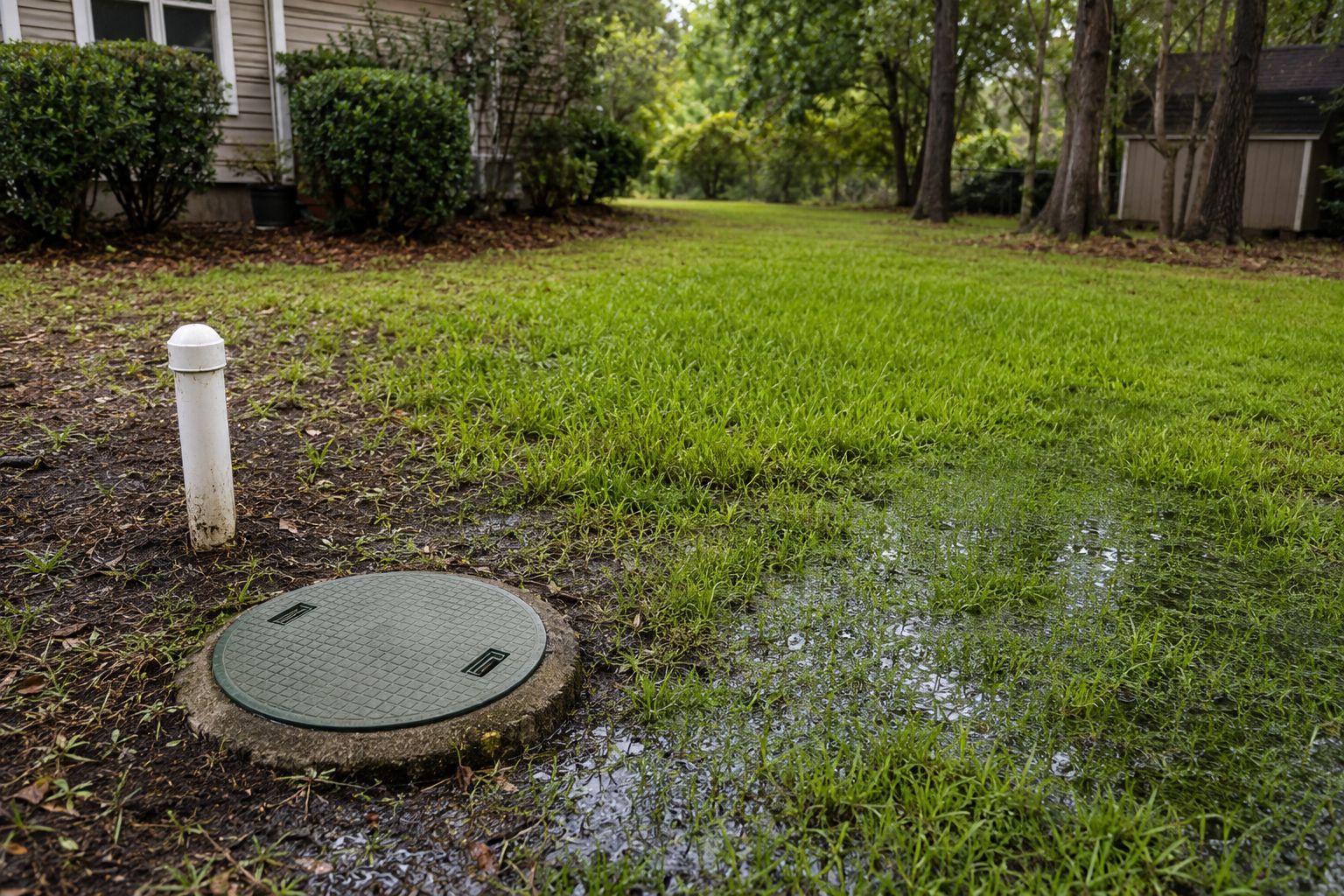
If you've lived on Piedmont soil for more than a season, you already know what the ground does after a hard rain. Water sits. Puddles linger in the yard for days after everyone else's have dried up. Post holes fill in like little wells. That same soil sits under your drain field right now, and it behaves the same way down there as it does on the surface — it takes water in reluctantly and lets it go even slower.
That matters more than most homeowners realize. A lot of the general advice about pumping "every three to five years" was written with average soil in mind — loam, sandy loam, something that drains at a reasonable clip. Red clay isn't that. Sitting on the kind of dense, sticky ground that's common from Winston-Salem out through the rest of the Piedmont Triad changes how often you should be calling for a pump-out, and the tank isn't the only part of the system that needs a schedule.
Why Clay Soil Changes the Pumping Math
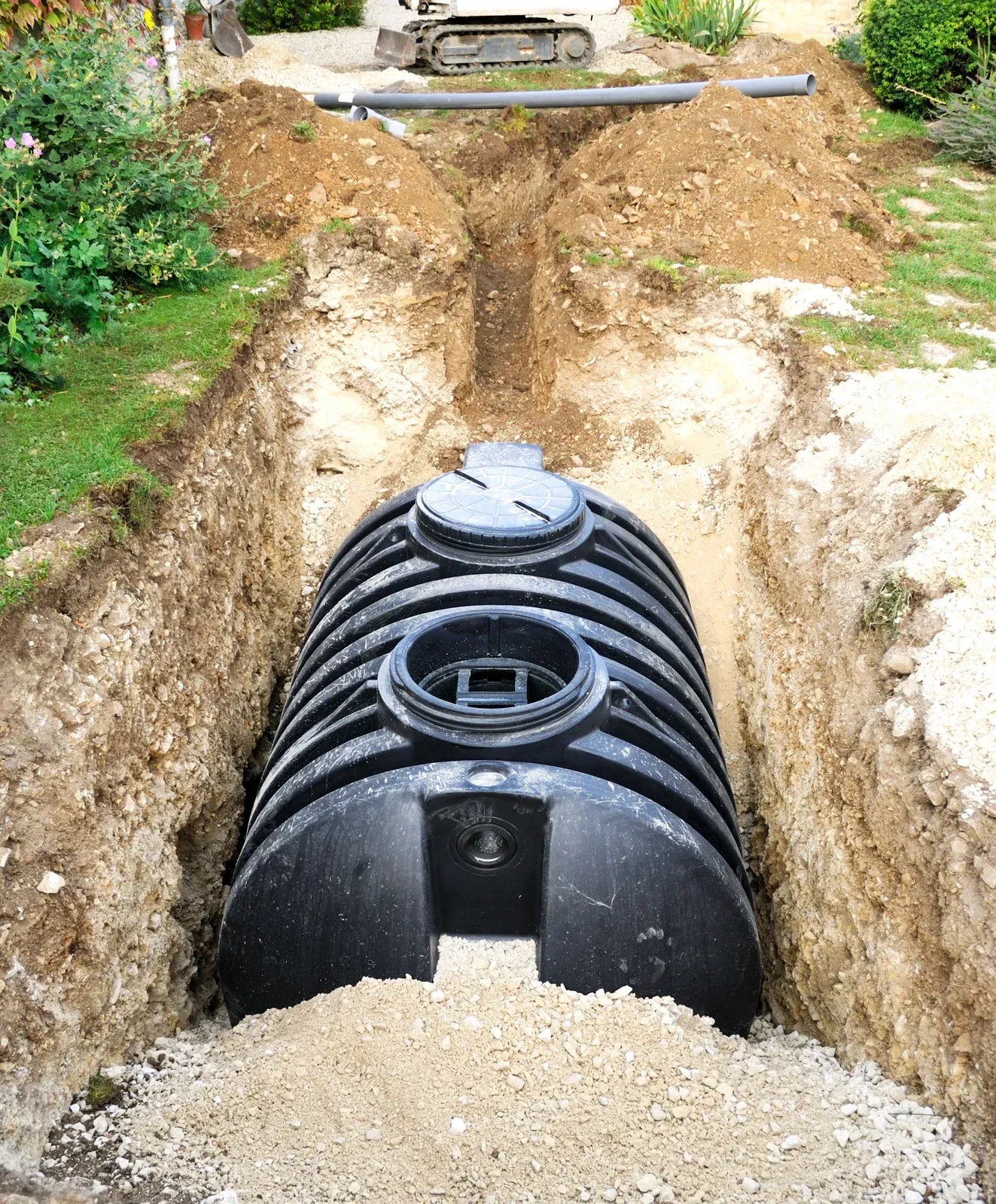
A septic system only works because the soil beneath the drain field does real treatment work. Effluent leaves the tank, moves through the field lines, and trickles down into the soil, where it's filtered and broken down before it reaches groundwater. That process depends on the soil absorbing liquid at a steady rate — what's known in the trade as the percolation rate, or perc rate.
Clay-heavy soil has a naturally slow perc rate. The particles are fine and packed tight, so water moves through in a trickle rather than a flow. Under normal conditions, that's already a tighter margin than a sandier lot would have. Add solids that shouldn't have left the tank in the first place, and the margin disappears fast. A field that's barely keeping up with clean effluent has almost nothing left in reserve once fine particles start working their way into the trenches.
I've seen this play out the same way on lot after lot around the Triad. It isn't just about keeping the tank itself in good shape. It's about protecting a drain field that has very little forgiveness built into it from the start.
What's Happening Underground Between Pumpings
Every healthy septic system develops something called a biomat — a thin, natural layer that forms in the top few inches of soil right where the drain lines meet the ground. In small amounts, it's actually useful. It helps filter out bacteria and fine particles before wastewater moves deeper into the soil.
The trouble starts when a tank goes too long without pumping. Solids that should stay behind in the tank start washing out into the field lines instead, thickening that biomat well past its normal, helpful size. On soil that already drains slowly, an overgrown biomat is close to the last straw. Once it seals off the soil pores completely, effluent has nowhere left to go — it backs toward the tank, or it surfaces in the yard over the lines. A conventional field that reaches that point usually can't be pumped or jetted back to health. At that stage, you're often looking at a full drain field replacement, a far bigger project than a routine pump-out ever would have been.
Sandier soil gives a system more room to recover from an overloaded biomat, because water still moves through the surrounding ground even when part of the field is struggling. Clay doesn't offer that cushion. Whatever capacity the field had was already stretched thin under normal use.
Tip: If your property has a drain field replacement area mapped out from when the system was installed, keep that record somewhere you can find it. Knowing where that reserve area sits, and keeping it clear of decks, sheds, and driveways, protects your options if the original field ever needs to rest or be rebuilt.
Tank Size and Household Use Still Set the Baseline
Clay soil shortens the safe interval, but it doesn't erase the two variables that always drive pumping frequency: how big your tank is, and how many people actually use it every day.
A standard 1,000-gallon tank serving two adults behaves very differently than the same tank serving a family of six. More people means more water, more solids, and faster sludge buildup, no matter what soil sits under the field. On typical Piedmont clay, a smaller household with a well-sized tank might reasonably stretch to something close to a three-year interval. A larger household on that same tank size should plan closer to every year or two — the solids build up that much faster on top of soil with less absorption capacity to spare.
That's exactly why a technician who's worked clay soil for years asks about household size and water habits before quoting an interval, rather than handing over a generic number off a chart. Garbage disposals, long showers for a house full of teenagers, weekend guests who show up every summer — all of it adds solids and water volume that a slow-draining field has to work harder to manage.
Signs Your Schedule Is Already Behind
Waiting for obvious trouble isn't a schedule. But it helps to know what the early signals look like so you're not caught off guard between service calls.
Slow drains throughout the house, not just in one bathroom, often point to a tank that's filling up. Gurgling in the pipes after you run the washing machine or dishwasher is another early sign — it usually means air is having trouble escaping because the system is more backed up than usual. A patch of grass over the drain field that's noticeably greener and lusher than the rest of the yard, especially during dry stretches, is one of the more reliable visual cues that effluent is surfacing closer to the roots than it should.
These signs tend to show up with less warning on clay soil than they would on better-draining ground, simply because the field has less spare capacity to mask a problem while it builds. By the time water stands on the surface or odors show up near the field, the soil underneath has usually been dealing with saturation for a while already.
Warning: Do not add fill dirt on top of a wet, smelly patch to try to cover it or level the yard. Piling soil over the area does not stop the effluent from surfacing. It just adds weight and can push the problem toward the house, or make the eventual repair more complicated, since the added material has to be removed before the field can be properly assessed.
Building a Realistic Schedule for Clay-Heavy Ground
Rather than picking a number out of the air, a workable approach starts with tank size and household count, then adjusts downward to account for the soil. If a chart says your household would be fine on a four-year interval on average soil, plan for something closer to two or three years instead. That adjustment isn't overly cautious — it accounts for how little room clay gives the system to recover if the interval runs even a bit long.
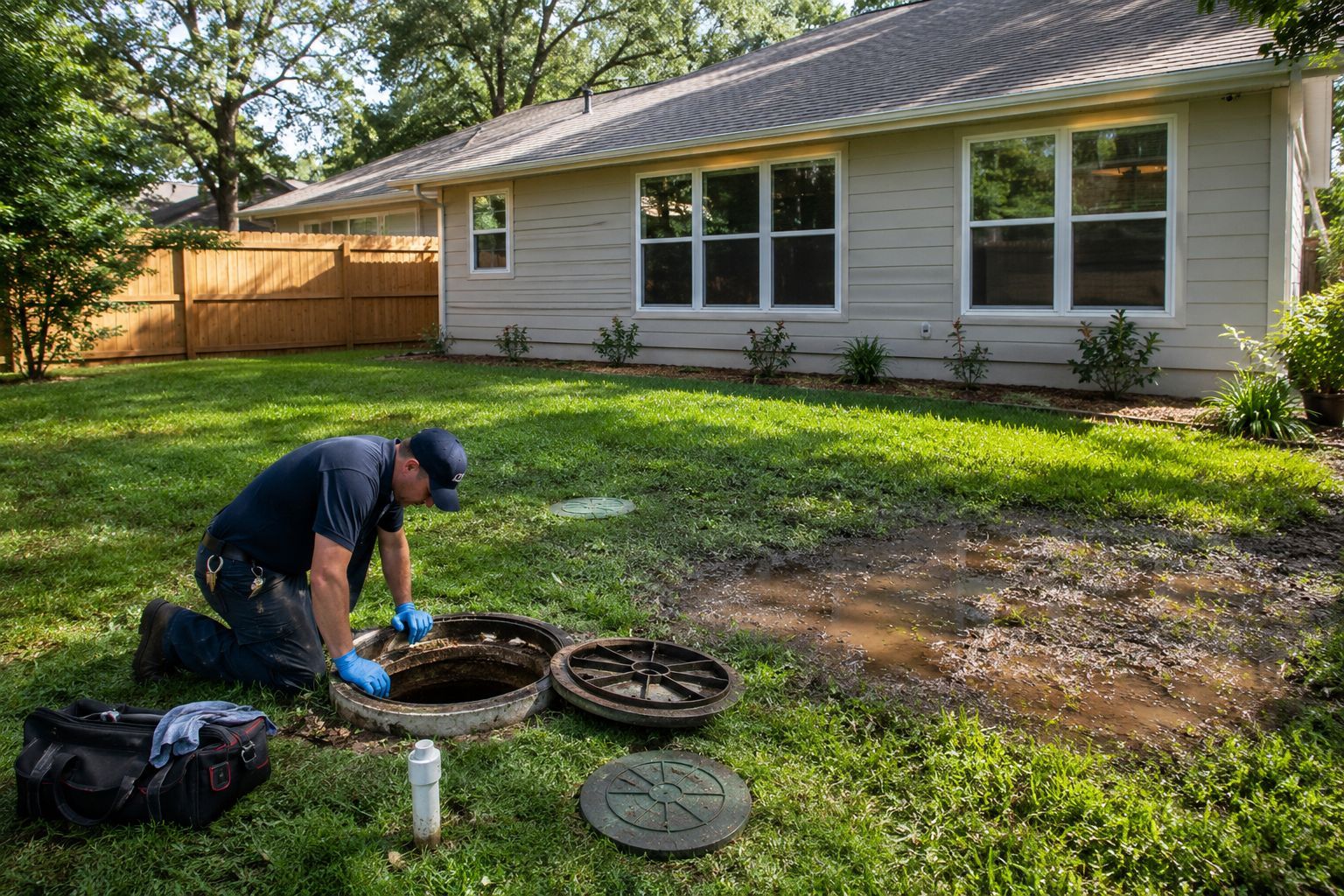
It helps to have someone physically check the sludge and scum layers now and then, rather than pumping purely on a calendar. A tank should generally be serviced once settled solids reach roughly a quarter to a third of the tank's liquid depth, or once the floating scum layer builds past four to six inches. Checking those levels directly gives a far more accurate read than any generic interval ever could.
A pattern usually shows up after a couple of inspections. Some households on clay really do need pumping every two years because of heavy water use. Others with lighter use and a properly sized tank can safely go a bit longer. The goal is finding your household's actual rate of buildup and staying ahead of it, not reacting after the fact.
What a Delayed Pumping Actually Costs the Field
Here's what's really at stake when a pumping gets pushed back a year or two longer than it should on clay soil. This isn't primarily about the tank — an overdue tank is a simple, routine fix. The real cost shows up in the drain field, and clay soil is what makes that consequence so steep.
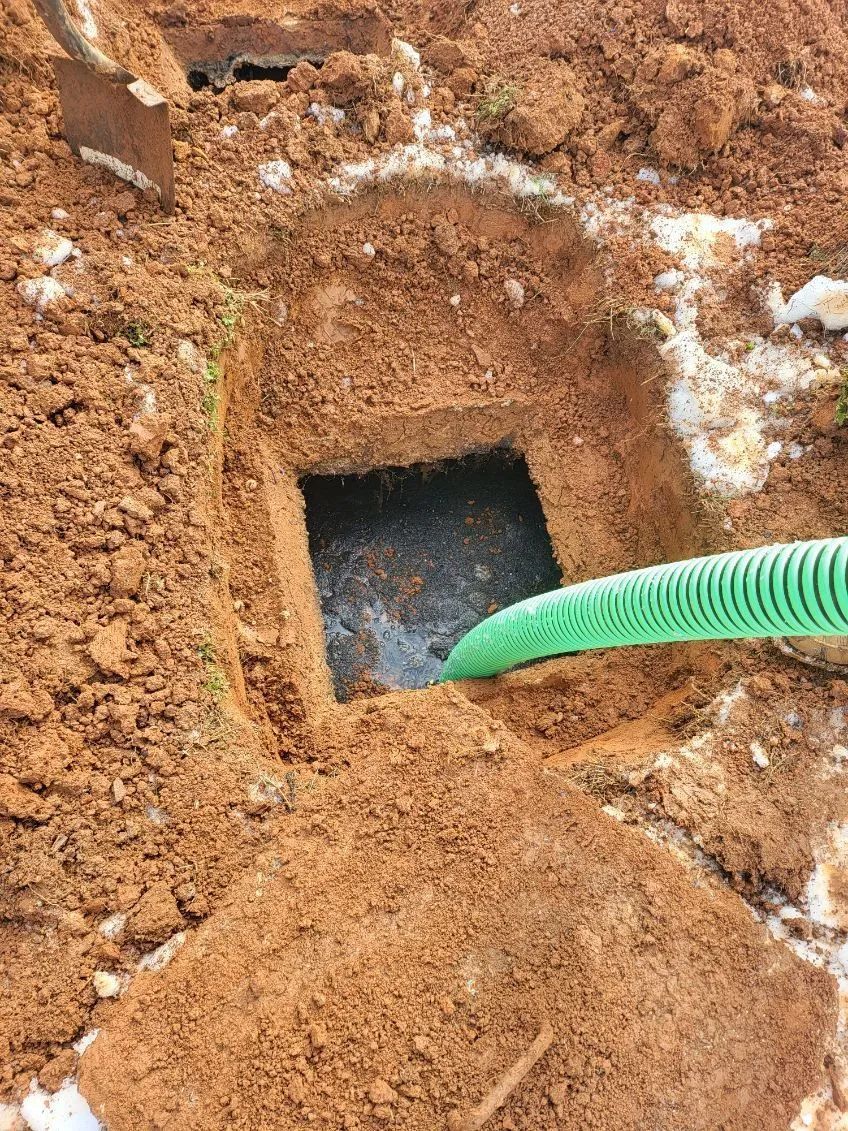
Once solids escape the tank and settle into the perforated pipe and gravel of the field lines, slow-draining clay underneath doesn't give them anywhere to go. They pile up in place instead of dispersing the way they might in sandier ground. That buildup can permanently shrink how much of the field is still absorbing effluent, even after the tank itself has been pumped clean. A field that once handled a household's full wastewater load comfortably can end up working at a fraction of its original capacity, doing the same job with much less usable soil underneath it.
A consistent pumping schedule exists to prevent exactly that outcome. On land where the soil was never going to be forgiving in the first place, staying ahead of solids buildup in the tank is the one variable a homeowner actually controls.
Signs Your Schedule Is Already Behind
Habits That Take Pressure Off a Slow-Draining Field
A pumping schedule works best alongside everyday habits that keep the load on the system lighter to begin with. Spacing laundry loads across the week instead of running several back to back gives the field time to absorb effluent between doses, rather than facing a sudden surge. Keeping grease, wipes, and food scraps out of the drains cuts the solids load the tank has to hold, which slows how fast sludge builds up between services.
Directing roof gutters, downspouts, and yard drainage away from the drain field matters even more on clay than on better-draining soil. Ground that's already saturated from redirected surface water has less capacity left to accept effluent from the field lines, which can make an otherwise sound system act like it's failing. Keeping the area over the field mowed in grass — never sealed over with a driveway, patio, or heavy structure — preserves whatever natural absorption and evaporation the soil can still manage.
None of these habits replace a pumping schedule. Together, though, they buy the system some breathing room, and that matters most on ground that doesn't have much slack to begin with.
Frequently Asked Questions
How is pumping frequency different on clay soil compared to sandy soil?
Clay soil drains slower than sandy soil, giving the drain field less capacity to absorb effluent and handle escaped solids. Clay-heavy lots typically need pumping every two to three years.
Can I tell how full my tank is without having it inspected?
Not reliably. Sludge and scum build up below the surface, hidden from the access lid, with no accurate way to judge levels by sight. Only inspection reveals your tank's condition.
Does a bigger tank mean I can wait longer between pumpings on clay soil?
A larger tank buys extra time, holding more capacity before solids become a problem. It doesn't offset what slow-draining clay does to the field. Household size and water use matter.
Will septic additives let me stretch out my pumping schedule?
No. Additives haven't been shown to slow how fast solids build up, and some introduce chemicals that stress the field. Pumping based on tank size and household use remains trusted.
What's the biggest mistake homeowners on clay soil make with pumping?
Using a generic interval meant for average soil, then getting caught when the field shows trouble ahead of schedule. Clay soil needs its own shorter timeline built around limited margin.
If my drain field already looks stressed, will pumping the tank fix it?
Pumping the tank stops the problem from worsening, but it doesn't repair soil already clogged by solids that reached the field lines. Inspection afterward reveals whether the field needs help.
How quickly can a clay-soil drain field go from fine to failing?
Faster than most homeowners expect, since slow-draining ground has little reserve capacity. A tank overdue by a year or two can push a field from normal to failing fairly quickly.
Does household size change how often I should pump on clay soil?
Yes, the effect is bigger than most assume. More people means more water and solids through the tank, shortening the interval. Clay compounds that, since the field has less room.
Keeping Your Septic System Ahead of Clay Soil
Red clay demands a different mindset than the generic maintenance advice printed on most septic pamphlets. A system pumped on time rarely announces itself with backups, odors, or standing water, because the soil underneath never gets pushed past what it can absorb. That quiet reliability is the real payoff of building a schedule around actual soil conditions rather than a number pulled from average ground. Homeowners who make that adjustment early tend to spend far less on emergency repairs down the road.
Newcomb Septic Services
has spent several
years working directly with the clay-heavy ground around Winston-Salem, NC, learning firsthand how differently these soils respond to routine maintenance compared with sandier ground elsewhere in the state. That hands-on familiarity shapes every recommendation offered to homeowners here, from tank sizing to pumping intervals suited to real household use. Understanding the soil beneath a property is what turns a maintenance schedule into one that actually protects the investment buried in the yard.